
Every week someone asks us the same question: "My website is on shared hosting at a few hundred rupees a month. Do I really need a cloud server?" Here is the honest answer, without jargon.
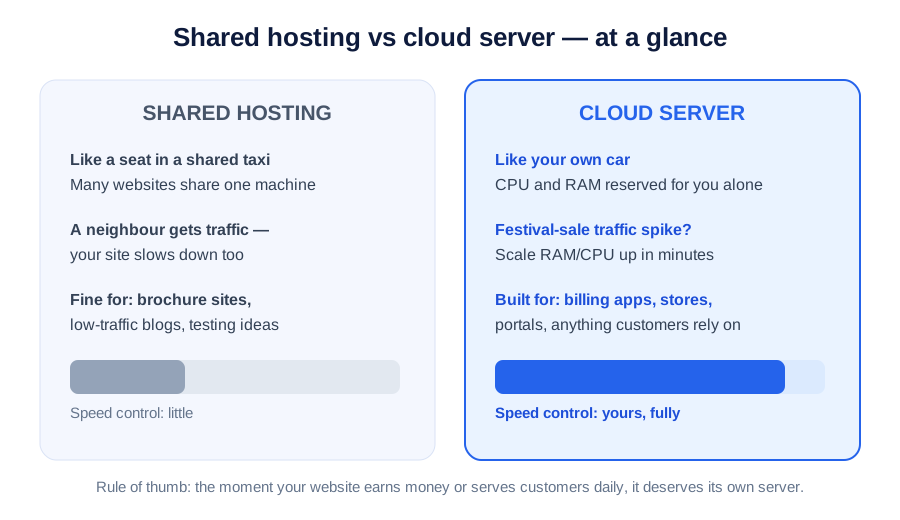
Think taxi seat vs your own car
Shared hosting is a seat in a shared taxi. It is cheap because dozens — sometimes hundreds — of websites travel on the same machine. Most days that is fine. But when a co-passenger brings luggage (a neighbouring site gets heavy traffic or gets hacked), everyone in the taxi feels it. Your site slows down for reasons that have nothing to do with you.
A cloud server is your own car. The CPU, RAM and disk are reserved for you alone. Your speed depends on your choices — and when you need more power for a season, you add it in minutes and remove it later.
The one-line rule
The moment your website earns money or serves customers daily — orders, bookings, billing, student logins — it deserves its own server. If it is a simple brochure site, shared hosting is still perfectly sensible.
What changes when you move
Three things, practically: pages load noticeably faster and stay fast during rush hours; you stop being punished for a stranger's problems; and backups, firewalls and updates are done properly for your machine, not a crowd. For businesses whose customers are in Uttar Pradesh, hosting close by matters too — every 1,000 km of distance adds delay to every single click.
What it costs, honestly
A capable managed cloud server in India starts around the price of one restaurant dinner per month. Compare that with what one slow-loading day during a festival sale costs you in lost orders, and the mathematics usually settles the debate.
If you want a plain-language opinion on your own setup, our Cloud Servers page explains the options — and the Edge Data Center in Lucknow is why UP businesses get an extra speed advantage with us.