
SaaS Verticals

Quotes in minutes, trips on rails

An itinerary builder that turns enquiries into branded PDF quotes in minutes, bookings with UPI advances, vendor rate cards, visa and passport checklists, group tour manifests and automatic follow-ups — the full back office of a travel agency, run from one screen in Hindi or English, live in about 7 days.
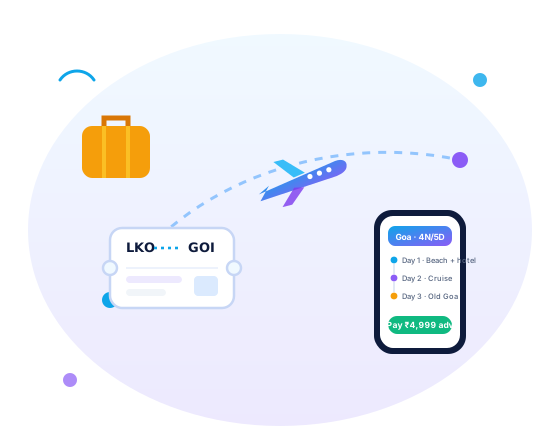
Travel agency automation — itineraries, quotes, bookings and follow-ups
Built For Agencies

The agency that quotes first usually wins the trip

Most agencies lose bookings in the gaps — the quote that took two days, the advance nobody chased, the visa document remembered too late. This suite closes those gaps with templates, reminders and one clean record per trip, so a small team runs like a large one.

From enquiry to a branded PDF quote in minutes

Pick a package, adjust dates and hotel category, and the price computes from your own vendor rate cards — out comes a professional PDF with your logo, day-wise itinerary, photos, inclusions and payment details. The fourth revision takes as little time as the first, and every version stays on the trip record instead of in someone’s chat history.

Agency team planning itineraries and quotes together at a table
Booking and payment dashboards showing advances and dues

Advances collected, dues visible, margins honest

Every quote carries a UPI payment link; the advance posts against the booking the moment it lands, and balance reminders go out on WhatsApp automatically. Vendor costs — hotels, cabs, guides, permits — are recorded on the same trip, so you see expense versus margin per trip instead of discovering at year-end which tours actually made money.

The Suite

Everything between enquiry and review

Itinerary & quote builder

Day-wise plans assembled from reusable blocks, priced from your rate cards, exported as branded PDF quotes — in minutes, not evenings.

Shareable package pages

Every package gets a web page with photos, plan and an enquire button — post it to WhatsApp status, Instagram bio and Facebook, and enquiries land back tagged.

Bookings & UPI advances

Payment links collect 20–30% advances by UPI or card, post them against the booking and chase balances on schedule — no more forgotten dues.

Vendor rate cards

Hotels, cabs, guides and permits with seasonal rates, contacts and payment terms — quotes price from real numbers, and payables track against each trip.

Document checklists

Per-destination visa and passport checklists per traveller, with validity checks and automatic reminders — the customer gets chased, not the agency blamed.

Group tour manifests

Traveller lists, room allocations, pickup points and emergency contacts generated from bookings — live-updated when someone cancels, on the tour manager’s phone.

  • Follow-up automation: payment due, trip reminders, arrival messages, post-trip review requests
  • Expense versus margin per trip, by package type and by season
  • Enquiry register with source tracking — learn which channel actually converts
  • Multi-currency rate cards for international packages, billed in rupees
  • TCS on overseas packages quoted upfront on the invoice
  • WhatsApp confirmations and receipts on the number customers already open
  • Roles for owner, counter staff and tour managers
  • Hosted on managed Indian cloud, monitored 24×7×365
One Booking, Start To Finish

What a trip looks like on the system

  • Monday, 11:00 AM · Enquiry

    Enquiry to quote in twenty minutes

    A family asks about Kedarnath on WhatsApp. The agent picks the standard 5N/6D package, swaps one hotel, and the branded PDF quote is in their chat before lunch — while two competing agencies are still promising to get back.

  • Monday evening · Confirmation

    Advance in, vendors blocked

    The customer taps the UPI link and pays a 25% advance; the booking confirms itself, receipts go out automatically, and hotel and cab requests fire to vendors from their rate cards — every cost recorded against the trip.

  • The weeks between · Auto-pilot

    Documents and dues chase themselves

    ID proofs collect against a checklist, the balance reminder lands ten days before departure, and a packing-and-weather message goes out at 48 hours. The agent touches the file only when a human decision is needed.

  • After return · The compounding part

    Review requested, margin known

    Within 48 hours of return, a thank-you with a Google review link goes out. The trip closes showing revenue, vendor costs and an honest 18% margin — and the family sits in the register for next year’s Char Dham season.

Indicative Pricing

Priced for the agency, not the airline

PlanBuilt forMonthly (indicative)Includes
Solo AgentOne-person agencies and home-based consultants₹1,499/moItineraries, quotes, bookings, payments, follow-ups
AgencyTeams with counter staff and multiple file handlers₹2,999/moEverything in Solo, plus roles, vendor payables and margin reports
Group-Tour Add-onOperators running fixed departures and group tours+₹999/moManifests, rooming lists, seat allocation and group payment tracking
Indicative pricing: prices are representative and exclusive of GST (18%). Setup and data loading are quoted in writing at the demo; payment-gateway and WhatsApp conversation charges pass through at published rates. No commission is charged on your bookings.

Demo

See the suite quoting a real package from your catalogue, on a call or at your office.

Setup

Branding, packages, vendor rate cards and terms loaded from your PDFs and price lists.

Team training in Hindi

Counter staff and tour managers trained hands-on, in Hindi or English.

Go live in 7 days

First live quote out, follow-ups running, support one call away in season.

under 30 min
From enquiry to branded PDF quote, using your package masters
7-day
Typical launch from demo to first live quote
2
Languages on every screen — Hindi and English
24×7
Package pages capturing enquiries while the office sleeps

Built with agencies, not just for them

Rate cards that understand seasons, checklists that understand embassies, and reminders that understand Indian payment habits — the workflows come from sitting with working agencies, not from a template store. Custom modules (a B2B sub-agent portal, a fixed-departure calendar, a specific report) are scoped and quoted separately, and then they are yours.

Hands joined over a table — an agency team and their customers
Trips The Suite Handles
Pilgrimage & Char Dham Honeymoon packages Weekend getaways School & college tours Corporate offsites Fixed group departures International holidays
People Also Ask

Travel Agency Automation — 20 questions, answered straight

The most-asked questions on the web about this topic, answered honestly by our team.

How do small travel agencies manage bookings digitally?
The working stack is an enquiry register (every lead with source and follow-up date), an itinerary and quote builder, a booking record linking traveller details to vendor confirmations, payment tracking for advances and dues, and automated WhatsApp reminders. Agencies typically outgrow Excel-plus-WhatsApp when double bookings, forgotten follow-ups or untracked advances start costing real money — usually somewhere around 15–20 active files a month.
What is an itinerary builder?
Software that assembles day-by-day travel plans from reusable blocks — hotels, transfers, sightseeing, meals — into a branded document with photos, inclusions, exclusions and pricing. What took an evening in Word takes minutes, quotes look consistent and professional, and version control stays sane when the customer asks for the fourth change. Good builders store your standard packages, so a Manali 4N/5D quote starts 90% done.
How can an agency send branded PDF quotes in minutes?
Keep masters: standard packages, hotel rate cards, inclusion templates and terms. A quote then becomes: pick the package, adjust dates and hotel category, auto-price from rate cards, and export a PDF carrying your logo, contact and payment details. Speed converts — the first professional quote in a WhatsApp thread anchors the customer before competitors respond. Aim for enquiry-to-quote under 30 minutes during working hours.
Can I collect advances by UPI or payment link — and should I?
Yes, and absolutely. A payment link sent with the quote turns intent into commitment: standard practice is a 20–30% advance to block arrangements, with the balance before travel or on a schedule for larger groups. Links collect UPI and cards, auto-receipt the customer, and post against the booking so dues stay visible. Uncollected advances are the top cause of agency cash stress — automate both the ask and the reminder.
What is a travel CRM and does a small agency need one?
A CRM organises leads and customers: source, destination interest, budget, follow-up dates, conversation history and post-trip anniversaries. For a solo agent, a disciplined enquiry register inside the booking software is usually enough. A CRM earns its fee when leads arrive from many channels — walk-ins, Instagram, references, portals — and more than one person follows up: nothing leaks, and you finally learn which source actually converts.
How do agencies manage hotel, cab and guide vendors?
Through vendor masters with rate cards: negotiated rates per season and room category, cab rates per route or per km, guide fees per day, plus contact persons, payment terms and blackout dates. Quotes then price from real numbers instead of memory, and margins survive staff turnover. Track vendor payables against bookings too — agencies quietly lose money on double-paid or forgotten vendor advances more often than they admit.
What is a group tour manifest?
The master sheet of a departure: every traveller with contact, ID and document status, room allocation, seat details, pickup points, dietary notes and emergency contacts — plus a rooming list for hotels and a passenger list for transport. Software generates these from booking records instead of a night of Excel before departure, and updates them live when someone cancels or a room swaps. The tour manager carries it on a phone.
How do agencies track passport and visa document checklists?
Per-destination checklists attach to each traveller: passport validity (six months beyond travel is the common bar), photos to specification, bank statements, forms and insurance. The system tracks received-versus-pending per person and reminds the customer directly, with buffer timelines by country and season for visas. A dated checklist also protects the agency when a customer submits late — document chaos is the most preventable trip disaster in the trade.
Can I share tour packages on WhatsApp and Instagram directly?
Yes — modern agency platforms give each package a shareable web page with photos, the day-wise plan, pricing and an enquire button; the same link goes to WhatsApp status, Instagram bio and Facebook. Enquiries land back in your lead register with the package pre-tagged. That turns social posting from brochure-forwarding into a measurable funnel: you learn which package and which channel actually produce bookings, not just likes.
How do I know which trips actually made money?
Per-trip profit and loss: revenue (package price × pax, plus add-ons) minus direct costs — hotels, transport, guides, permits, meals — recorded against that booking. Agencies that track this discover uncomfortable truths, like the prestige group tour earning 4% while simple honeymoon packages earn 22%. Record vendor costs at booking time, not month end, and review margin by package type every quarter. Revenue is vanity; per-trip margin is the business.
Do I need IATA accreditation to sell flights?
No. Most Indian agencies book flights through consolidators and B2B portals that hold the accreditations, earning a markup or commission per ticket. IATA accreditation matters when you want direct airline ticketing at scale — it involves financial guarantees and audits that rarely make sense below serious ticket volumes. For package businesses, flights are usually a pass-through anyway; the margin lives in the land arrangements.
What GST applies to tour packages?
The common regime for tour operators is 5% GST without input tax credit on the package value; pure commission models and mixed supplies can differ, and hotel or air components carry their own treatment when billed separately. The structuring choice — principal versus agent — changes both tax and paperwork. This is genuinely CA territory: pick a structure with professional advice, then make the software bill accordingly from day one.
How does follow-up automation work for an agency?
Triggers fire messages at the moments that matter: a reminder two days after a quote, a payment schedule once the advance lands, document and packing reminders before departure, a welcome message on arrival day, and a review request after return. Each is a template with the customer name and trip details merged in, sent on WhatsApp automatically. The effect is a tireless follow-up assistant for a few thousand rupees a year.
How should an agency collect and use post-trip reviews?
Ask within 48 hours of return, while the glow beats the amnesia — an automated WhatsApp message with a direct Google review link works best. Route unhappy responses to a private feedback form first, so problems reach you before the internet does. Reviews compound: 50 genuine Google reviews lift an agency to the top of local searches in most tier-2 cities. Reuse the best quotes, with permission, on package pages.
Should a small agency build its own customer app?
Skip it initially — travellers rarely install an app for one trip a year. What earns: a professional web presence with bookable package pages, WhatsApp for conversation, and strong internal software for quotes, bookings and follow-ups. An app makes sense for agencies with heavy repeat business — corporate travel desks, monthly pilgrimage operators — where saved preferences and one-tap rebooking genuinely get used week after week.
How much does travel agency software cost in India?
B2B booking portals are usually free, with markups built into their inventory. Agency management software — quotes, bookings, payments, follow-ups — runs roughly ₹1,000–5,000 per month in India. Indicatively, Addroit Nexus prices its travel suite at ₹1,499 per month for a solo agent and ₹2,999 for agencies, with a ₹999 group-tour add-on; GST extra, prices indicative. Weigh that against one saved double-booking or one recovered follow-up a month.
Can software handle both domestic and international packages?
Yes — the differences are data, not workflow: multi-currency rate cards with a billing currency, destination-wise document checklists, international transfer and insurance line items, and TCS handling on overseas packages. Domestic remains the volume game; international carries the compliance weight. If you sell both, insist that the per-trip margin report converts everything to rupees at booked rates, so comparisons between the two stay honest.
What is TCS on foreign tour packages?
On overseas tour packages, the agency must collect tax at source from the customer — currently 5% up to an annual threshold (₹10 lakh at present) and 20% above it — deposit it against the customer PAN, and file returns. The customer adjusts the TCS against income tax later. Quote it upfront to avoid ugly surprises at balance-payment time, and confirm current rates with your CA; they have changed more than once in recent years.
How long does it take to digitise a travel agency?
Indicatively about a week: a demo and setup on day one, then loading your packages and vendor rate cards, a staff walkthrough in Hindi or English, and live operation — Addroit Nexus structures exactly that 7-day path. The real work is gathering your own masters: package descriptions, photos, rates and terms scattered across old PDFs and phone galleries. Agencies that assign one person to collect content go live twice as fast.
What should an agency measure monthly to grow?
Enquiries by source, quote-to-booking conversion (healthy agencies convert 15–30% of qualified enquiries), average package value, per-trip margin by category, advance-collection lag, repeat and referral share, and review count. Two levers move most agencies: faster first quotes — measure hours and push under one working day — and systematic post-trip review requests. Growth rarely needs more leads first; it needs fewer leaks from the leads already arriving.
Quick Query

Have a project in mind? Let's talk.

Tell us what you are building or what is slowing you down — we reply with a clear, honest plan.

  • Response within one business day — usually much faster
  • You talk to engineers, not a sales script
  • Your details stay with us — see our Privacy Policy
Captcha code

By submitting, you agree to be contacted about your enquiry and accept our Privacy Policy. Your query is stored securely and never sold.

Get Started

Let's build something that lasts.

From a single landing page to a rack in our Lucknow edge data center — talk to a real engineer today and get a straight answer.