
Every few months a rumour goes around: "UPI par charge lagne wala hai!" — and shopkeepers worry. Let us separate what is actually free from what quietly is not, so nothing on your statement surprises you.
Genuinely free (as things stand today)
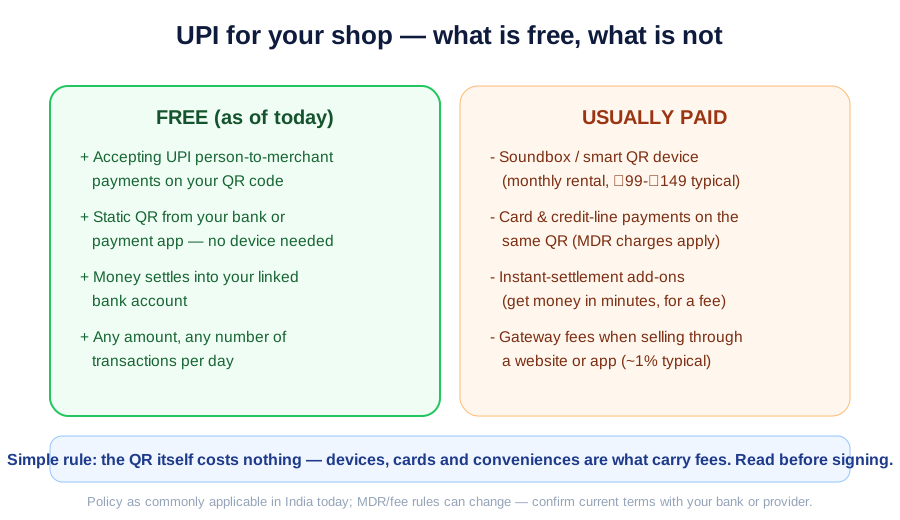
Accepting normal UPI payments from customers on your QR code costs you nothing. The static QR itself — from your bank or any major payment app — is free. Settlement into your linked bank account is free. There is no per-transaction cut on standard person-to-merchant UPI, whatever the amount, however many times a day. The rumours mostly grow from proposals and committee discussions that have not touched everyday QR payments.
Where fees genuinely live
Four places, and all of them are optional add-ons, not UPI itself. The soundbox ("payment received, two hundred rupees!") is a device on monthly rental, typically ₹99–₹149. Card and credit-line payments accepted on the same QR carry MDR — that is card economics, not UPI. Instant-settlement add-ons that move money to your account in minutes instead of the normal cycle charge for the convenience. And when you sell through a website or app, the payment gateway takes its ~1% — again, gateway economics, not your counter QR.
The rule that protects you: the QR is free; devices and conveniences carry the fees. Whenever an agent offers an upgrade, ask one question — "iska monthly charge kya hai?" — and read before signing.
One habit worth building
Once a month, open your settlement statement and check the credits against your own sales note. Not because anyone is cheating — because unnoticed subscriptions and mismatched settlements are found by the shopkeepers who look. The ones who look, save.
Money and payment flows are what our FinTech solutions work concerns daily — and if reconciling collections against your own records sounds like the boring part, that is literally a service we run: Bill Reconciliation, AI-matched and human-verified.