
Ask any restaurant owner their single biggest frustration and the answer is usually the same: "The apps bring orders, but at the end of the month there is nothing left." Let us do the arithmetic on one ₹500 order, openly.
One order, two endings
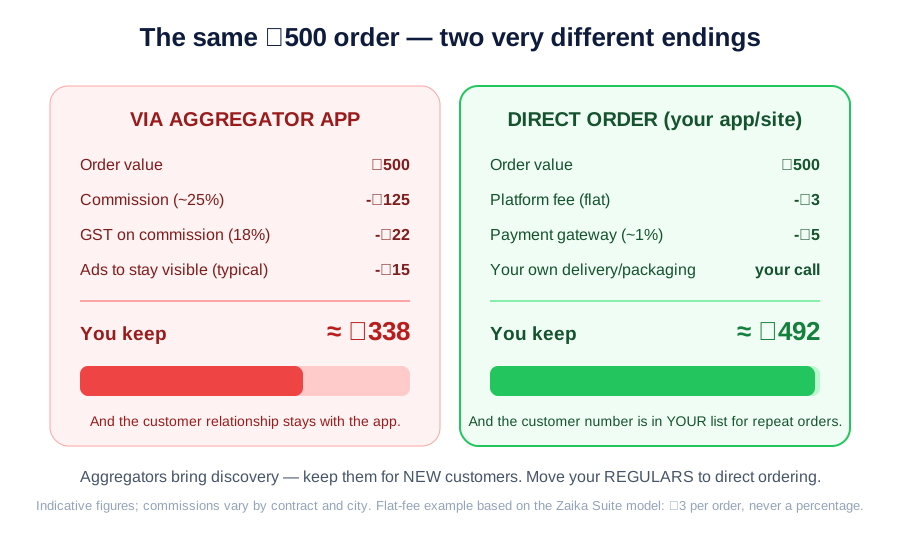
Via an aggregator, a typical contract takes around 25% commission, plus 18% GST on that commission, plus the advertising most restaurants end up buying to stay visible. From ₹500, roughly ₹338 reaches you — before your food cost, staff and rent. Via your own ordering channel, the same order costs a flat platform fee and about 1% payment gateway charge: roughly ₹492 stays with you. And the customer's number lands in your list, not the app's.
So should you quit the apps? No — and this is important
Aggregators are excellent at one thing: discovery. A newcomer searching "biryani near me" finds you there. Quitting them entirely throws away new customers. The smart structure we see winning everywhere:
- Aggregators for strangers — treat the commission as a marketing cost for first-time customers.
- Direct ordering for regulars — the family that orders every Sunday should not cost you 25% every Sunday. A card in every aggregator bag ("Order direct next time — 10% off, faster delivery") moves them, one by one.
- WhatsApp as the bridge — regulars reorder with two taps from a link you send.
You do not need to beat the apps. You only need to stop paying rent on customers who are already yours.
What "direct ordering" needs to work
Three things: a menu page that loads fast on a phone, UPI payment built in, and order alerts your kitchen actually notices. That is precisely what our Zaika Suite provides — at a flat ₹3 per order, never a percentage — because we think the maths above should stay in your favour permanently.