
Doctors ask us this in one form or another every month: "Everyone says go digital, and now there is this ABDM thing. What does it actually mean for my small clinic?" Here is the calm version.
ABDM in one paragraph
The Ayushman Bharat Digital Mission (ABDM) is the government's framework for connecting India's health records. Patients get an ABHA number — think of it as a health account number — and with the patient's consent, their reports and prescriptions can follow them between clinics, labs and hospitals. For clinics it is not a compulsion today; it is rails being laid. Clinics that keep records digitally will simply plug in when it matters.
The three-stage path (no big bang required)
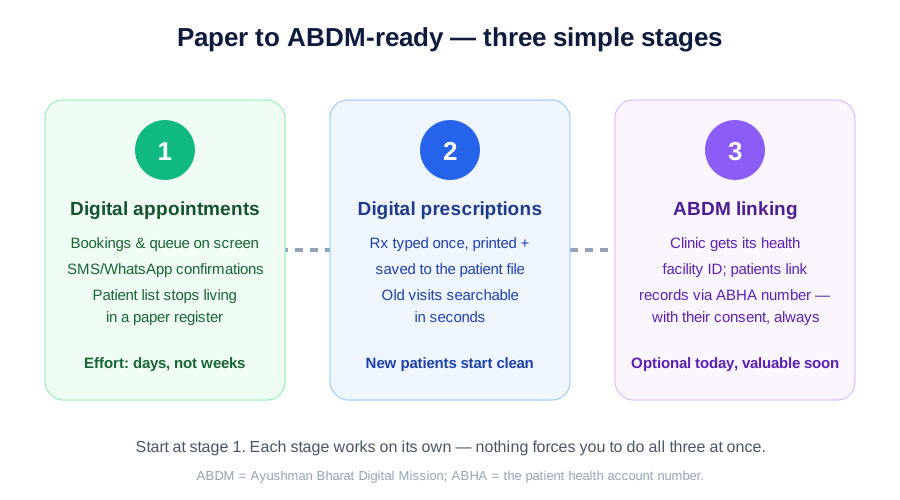
Stage one is appointments — bookings and the daily queue on a screen, confirmations on WhatsApp. It takes days to adopt, and reception feels the relief immediately. Stage two is digital prescriptions — typed once, printed for the patient, saved to their file; old visits become searchable in seconds instead of an almirah hunt. Stage three is ABDM linking — the clinic gets its facility ID, and patients who want it link their records via ABHA, always with consent.
Start at stage one. Each stage stands on its own — a clinic that only ever does appointments and prescriptions digitally has already ended its paper problem.
The worries, answered honestly
"I am not technical." If you can use WhatsApp, you can use a well-made clinic system — and anything requiring a manual has failed its design. "What about patient privacy?" Digital records in a proper system, hosted in India with consent-based sharing, are far safer than files in an unlocked cupboard. "Will it slow my OPD?" For the first week, slightly. From the second, prescriptions are faster than handwriting — templates do the repeating part.
Our Arogya Clinic Management is built for exactly this journey, stage by stage, in Hindi and English. See it on your own OPD in a demo.